From ancient times to today’s trends, the dress has evolved through the ages, constantly reinventing itself. Here’s a look back at the history of a garment that has become a universal cultural symbol.
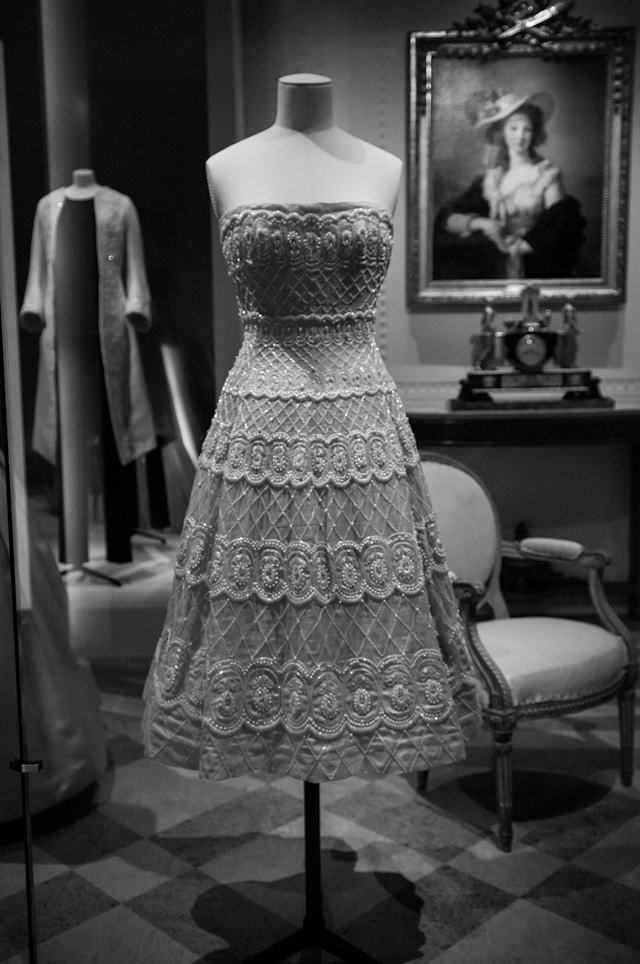
Much more than just a piece of clothing, the dress holds a special place in the history of societies. Found in various forms across continents and eras, it reflects the cultural shifts, social norms, and aesthetic aspirations of each generation. While its silhouette has changed over time, its symbolic role remains intact: that of a garment capable of telling the story of an era.
For centuries, the dress has been a part of life’s most significant moments. It is associated with ceremonies and celebrations, but also with everyday life. Every culture attributes specific meanings to it, whether it be elegance, social status, tradition, or personal expression.
Today, ready-to-wear brands are contributing to this ongoing reinvention. Some offer styles designed to adapt to different times of the day, such as the knit dress from Camaïeu, created to be worn in both casual settings and for more formal occasions. This versatility perfectly illustrates consumers’ new expectations.
A history that spans civilizations
The dress has existed in various forms since ancient times. In Greek and Roman societies, it took the form of long, draped tunics. In the Middle Ages, it became a marker of social status, with fabrics and embellishments often reserved for the elite.
Over time, styles have evolved in step with cultural shifts. Periods of prosperity favored sophisticated silhouettes, while eras marked by social change encouraged more practical clothing. Thus, the dress has become a privileged witness to human history.
A reflection of social change
Beyond its aesthetic appeal, the dress also tells the story of the changing role of women in society. Women’s liberation movements have gradually influenced the styles, lengths, and fabrics used.

In the 20th century, designers introduced a host of innovations to offer greater freedom of movement. Dresses became more functional, more accessible, and better suited to diverse lifestyles. This evolution continues today with styles designed to meet the demands of a dynamic daily life.
Between tradition and modernity
One of the dress’s greatest strengths lies in its ability to blend heritage with innovation. Some designs draw direct inspiration from traditional attire, while others embrace decidedly contemporary lines. This coexistence of past and present explains why the dress remains an essential garment in many cultures. It allows for the preservation of historical dress codes while incorporating current trends.
A garment suited to new lifestyles
The quest for simplicity has a strong influence on contemporary fashion choices. Consumers now favor pieces that can adapt to multiple situations without compromising on style or comfort. This trend has led to the rise of versatile dresses that are easy to accessorize and wear in a variety of settings. More than just a wardrobe staple, the dress has thus become a true everyday companion.
A cultural icon that remains timeless
If the dress has endured through the centuries without losing its popularity, it is because it has always evolved with the times. In every era, it takes on new forms, new materials, and new uses, while retaining its strong symbolic significance.
Combining cultural heritage, personal expression, and adaptation to modern lifestyles, it remains one of the garments most representative of the evolution of societies. Proof that certain pieces never truly disappear they simply reinvent themselves over the generations.














Follow us on Instagram