Why the glass matters more than we realise
We’ve all been there: a promising bottle, a lovely table, and yet the wine seems ‘closed’, almost shy. Very often, it’s not the wine that’s holding back, it’s the glass that’s holding it back. The glass acts as a sort of director. Its shape guides the aromas to the nose, and the way it’s sipped influences how the wine hits the tongue, which in turn alters our perception of acidity, sweetness and tannins.
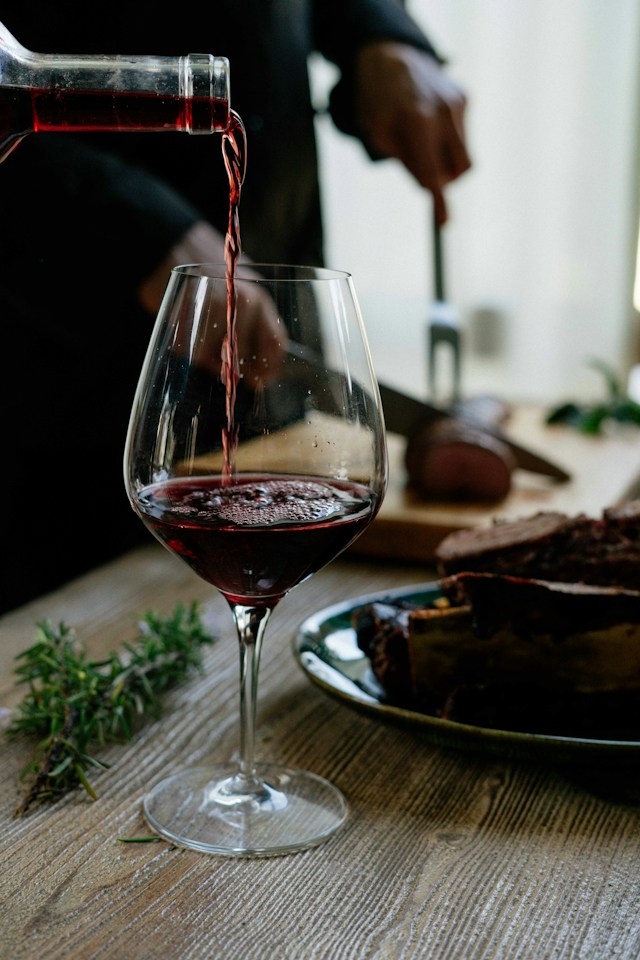
A telling example: a crisp white served in a glass that is too wide may seem flat, as the aromas disperse and the freshness appears less pronounced. Conversely, a tannic red in a small glass may come across as more austere, as the wine hits the palate all at once, without the roundness that certain shapes provide. The good news is that you don’t need to collect twenty different types. With a few simple guidelines, you can instantly enhance the experience, even on a weeknight.
The 4 criteria that really make a difference to the tasting experience
The shape of the bowl: concentrating or opening up the aromas
The bowl is the ‘bulb’ of the glass. The wider it is, the greater the surface area available for the wine to breathe. This can help a young red to soften or allow an oaked white to express itself. A narrower bowl, on the other hand, channels the aromas and highlights precision, making it ideal for highly aromatic wines or sparkling wines.
The rim: the subtlety that changes the sensation
The rim of the glass influences the tactile perception. A thin rim makes the sip smoother and more elegant, and allows the wine to ‘speak’ without the glass imposing itself. A thick rim can give a heavier impression and sometimes detract from the delicacy, particularly with whites, rosés and champagnes.
Size: bigger isn’t necessarily better, but…
A large glass has a practical advantage: it allows you to pour a reasonable amount whilst leaving space to swirl the wine, which releases the aromas. However, the size should still be suited to your needs. If you’re serving small quantities or are primarily looking for versatility, a well-designed medium-sized glass works wonders.
Material and weight: pleasure in the hand
We often forget it, but tasting begins with the sense of touch. A light, well-balanced glass makes you want to take your time. A glass that is too heavy tires the hand, especially during a meal. It’s also a question of rhythm: when the movement feels natural, you focus on the aromas, not on the object itself.
A small set of glasses to cover 90 per cent of situations
The « all-purpose » glass: your everyday companion
If you had to choose just one style, go for an all-purpose glass: a bowl wide enough to allow the wine to breathe, a slightly tapered rim to concentrate the aroma, and a narrow rim. It works well with a fruity red, a dry white, a rosé for a meal, and even certain sparkling wines served as an aperitif. It’s also the best option when entertaining and you want a harmonious table setting without overcomplicating things.
Two useful additions: sparkling wines and full-bodied reds
For sparkling wines, avoid very narrow flutes if your aim is flavour rather than spectacle. A coupe glass is pretty but quickly dissipates the effervescence. A tulip-shaped glass, slightly tapered, often offers the best compromise. For more structured reds, a fuller-bodied glass helps to round out the tannins and allow deeper aromas – such as spices, cocoa and leather to breathe.
What if you only have mismatched glasses?
It’s more common than we care to admit. In that case, stick to a simple rule: for an intense wine, choose the widest glass; for a very aromatic and fresh wine, the narrowest. And if you’re unsure, always opt for the glass with the narrowest rim it’s the one that will fade into the background.

Serving well also means knowing how to use your glass
A good glass won’t make up for poor service. Fill it to a third of its capacity, rarely more. This leaves room for oxygen and prevents the wine from warming up too quickly from the heat of your hand. For whites and rosés, serve them cooler but not ice-cold, otherwise the aromas will be stifled. For reds, serving them too warm accentuates the alcohol and tires the palate.
When it comes to care, avoid washing-up liquid with overpowering scents. A thorough rinse and drying with a clean, lint-free tea towel make a world of difference. If you’ve ever smelled a cupboard odour in a glass, you’ll know just how much it can spoil a tasting. Ideally, store your glasses away from strong odours, and give them a quick rinse with hot water before use if you haven’t taken them out for a while.
How to choose a good glass without becoming an expert
Whether in-store or online, it’s easy to get lost amongst all the technical terms. To keep it simple, look for: a narrow rim, a well-proportioned shape (not just one that’s ‘pretty’), a glass that feels balanced in your hand, and crystal-clear transparency that shows the wine off to its best advantage. Leading glassware manufacturers have been refining these details for years, and this is evident when you use them. For those who enjoy exploring different styles of wine and taking pride in their table settings, there are also specialist selections dedicated to the world of wine, for example at Bovino, where you’ll find just as many bottles as there are accessories designed for wine tasting.
When a top-of-the-range glass is worth it
Not everyone needs top-of-the-range glasses, and that’s perfectly fine. The more relevant question is: do you regularly open bottles that you want to understand, savour and compare? If so, a higher-quality glass becomes a genuine tool, not a luxury. You’ll notice greater aromatic precision, a purer sensation on the palate, and often a sense of ‘depth’ that makes the wine more accessible.
In this category, certain models have become classics amongst wine enthusiasts, notably the Zalto glass, often appreciated for its lightness and its ability to let the wine express itself without any heaviness. The idea isn’t to treat it as a sacred object, but as a dining companion that transforms a shared glass of wine into a genuine moment of appreciation.
Common mistakes that ruin a good wine
Serving a fine red in a glass that’s too small
The wine seems constricted, more tannic and less aromatic. If you don’t have the ideal glass, pour a little less and let it breathe more.
Using glasses that smell of the cupboard
This is the silent enemy. A quick rinse with hot water and a thorough wipe-down before serving will prevent many disappointments.
Filling the glass « to be generous »
You might think you’re being generous, but you end up losing the aromas and control over the temperature. It’s better to top up as you go – it’s more convivial and often more flavourful.
The right glass is the one that makes you want to slow down
Ultimately, choosing a wine glass is about choosing a way to savour the moment. Whether it’s a Sunday lunch with the family, an impromptu aperitif or a dinner where conversation flows for hours, the glass becomes a small, discreet ritual. It doesn’t replace a fine bottle, but it reveals what it has to offer. And when you’ve found the shape that appeals to you, you feel it straight away: the tasting becomes clearer, smoother, and you get that simple sense that the wine finally has the space to tell its story.
















Follow us on Instagram