Long restricted to alternative nutrition insiders, spirulina has become a staple in the daily lives of millions of people in just a few years. But in the face of this massive craze, one question remains: are we dealing with a true nutritional treasure or just a marketing phenomenon?
An extraordinary concentration of nutrients
Behind its characteristic blue-green color, spirulina hides a composition of rare richness in the plant kingdom. Composed of 60 to 70% complete plant protein containing all essential amino acids, it is an ideal source for athletes and vegetarians. It also contains highly bioavailable iron, B-complex vitamins, and beta-carotene.
However, the real secret to its effectiveness lies in phycocyanin, a blue pigment with major antioxidant properties. To fully benefit from these properties every day, choosing french spirulina proves to be the wisest choice to guarantee optimal freshness and a cultivation free of heavy metals.
Superfood or passing trend?
Considered by the World Health Organization as a food of the future, spirulina is not a miracle cure, but a top-tier supplement to boost vitality. Health safety agencies regularly point out that its benefits depend primarily on the conditions in which it was produced and harvested.
The main benefits validated by research and practice include:
Reduced fatigue: thanks to the combined action of iron and B vitamins.
Immune system support: notably through the antioxidant properties of phycocyanin.
Muscle recovery: valued by athletes to combat oxidative stress.
Essential criteria for choosing the right spirulina
Not all spirulina products on the market are created equal. Due to its natural ability to absorb elements from its environment, this cyanobacteria can easily bind contaminants if the cultivation water is polluted.
1. Origin and safety controls
Opt for local cultivation governed by European standards. Bacteriological controls and heavy metal analyses must be rigorously performed for every marketed batch.
2. Drying method
The drying temperature is decisive. High-temperature drying destroys heat-sensitive molecules. Gentle, low-temperature drying preserves the integrity of phycocyanin and vitamins.
3. Active ingredient concentration
A quality product should guarantee a minimum level of phycocyanin. While the market average is around 15%, high-end products regularly exceed 20%.
The Nutri&Co commitment: transparency and premium quality
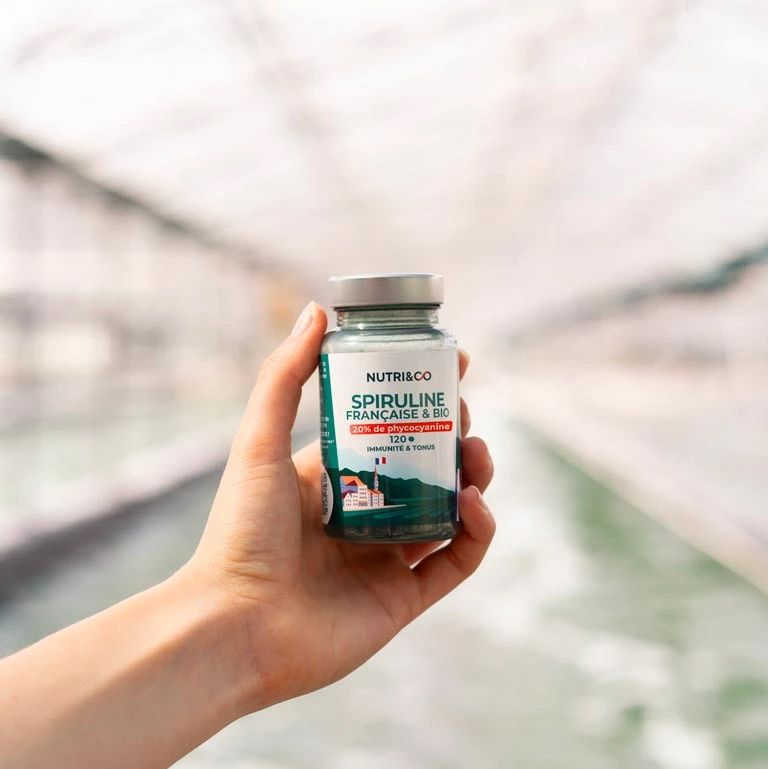
Nutri&Co, a French company specializing in premium dietary supplements with transparent formulas, relies on three pillars: effectiveness, support, and reliability. Every product stems from a rigorous process combining high-quality active ingredients, scientifically backed efficacy, and the total absence of controversial additives. The brand’s product sheets detail the origin of ingredients as well as contract manufacturers, and each product includes a QR code to ensure complete traceability.
Its certified organic spirulina is cultivated in France under strict requirements. It undergoes low-temperature drying and cold compression (RAW™ certification), thereby preserving phycocyanin with a guaranteed level exceeding 20–25%. Additionally, the brand transparently publishes microbiological and heavy metal analyses for every batch.
Sources and references
- ANSES – French National Agency for Food, Environmental and Occupational Health Safety.
- Nutri&Co Spirulina Product Sheet.









Follow us on Instagram