In a small bathroom, your gaze quickly encounters the room’s boundaries. The choice of wall and floor coverings can soften this impression, without increasing the available space. Bathroom wall tiles play a part in shaping this perception, just as much as the lighting and the layout of the fixtures. There are five factors worth considering: the continuity of surfaces, the tile size, the colours, the direction of installation and the pattern of the grout lines. How effective these are always depends on the actual layout of the room.
Continuity of surfaces: a unifying theme for the space
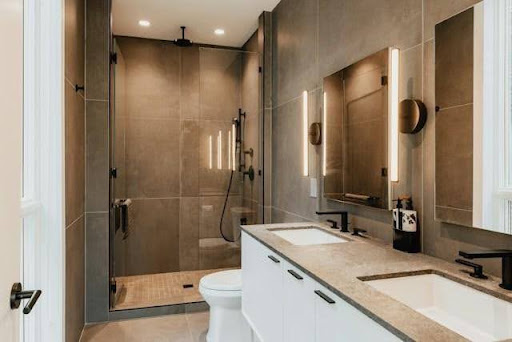
Visual continuity plays a major role in how we perceive space. By choosing tiles that extend from the floor to the walls without any marked break, you minimise the fragmentation of the room. This approach creates a sense of harmony that guides the eye and softens the physical boundaries of the bathroom. For example, opting for the same shade or a similar texture for the floor and walls, or extending the tiling behind the bathroom units, can give the impression that the room stretches beyond its actual dimensions.
This does not necessarily mean making everything uniform: a slight variation in finish or size provided it remains consistent is often enough to preserve the overall fluidity of the space. This method, which is particularly effective in spaces where every square metre counts, helps to create a soothing atmosphere conducive to relaxation. It is also advisable to decide which areas actually need to be protected against splashes. In a shower, aesthetic considerations are no substitute for preparing the substrate or ensuring the area beneath the cladding is properly waterproofed.
Tile size and shape: choose according to the proportions of the bathroom
The choice of tile size and shape directly influences the perception of space. Contrary to popular belief, large tiles are not necessarily suitable for all small bathrooms. If the room is very narrow, elongated tiles laid lengthways can create the illusion of a more spacious area. Conversely, in an almost square bathroom, medium-sized tiles or subtle geometric patterns may be enough to add dynamism to the perspective without overwhelming the space.
Mosaic tiles, meanwhile, add rhythm and can be used to highlight a specific area, such as the shower or the area around the mirror. The key is to adapt the geometry of the tiles to the actual layout of the room, to avoid visually overloading the space or creating unintended effects of crowding. Before placing an order, a sketch showing the dimensions and any obstacles will help you calculate where the visible cuts will be. This step prevents you from choosing a pattern where the joints fall precisely in the centre of a narrow wall.
Colour and light reflection: playing with brightness
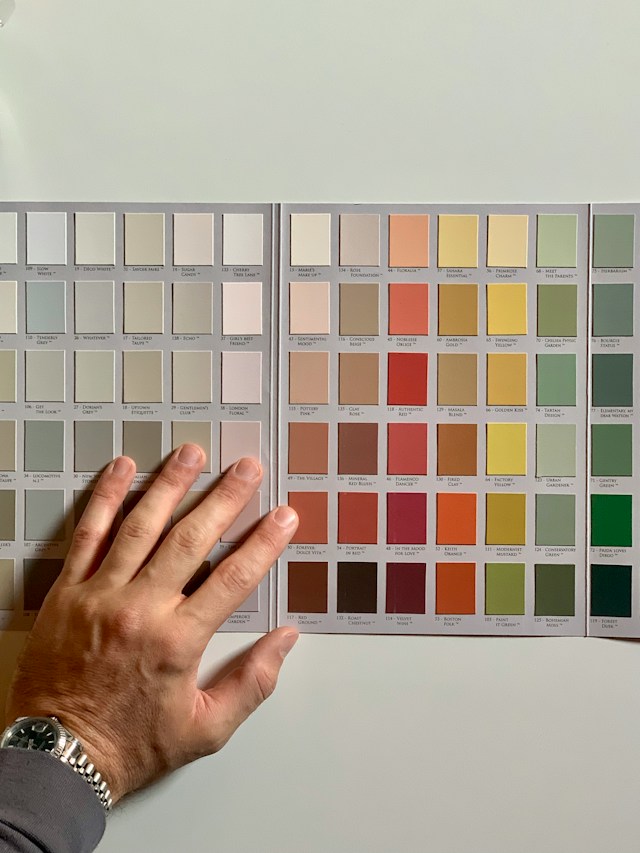
Light gives the same colour a different appearance depending on the time of day and the type of lighting. An off-white or beige can make a small bathroom appear brighter, but the effect depends on the amount of light and the finish of the tiles. A glossy surface reflects light sources more strongly; it may also show marks more easily. Dark accents are still possible, for example behind a washbasin or in a recess, provided you check how they look with the rest of the fittings. It’s worth looking at samples in the room itself rather than relying solely on photos in a catalogue.
Laying direction and room proportions: the art of perspective
The direction in which tiles are laid can alter the way the eye moves across the walls. Rectangular tiles laid horizontally emphasise width, whilst vertical laying emphasises height. These are not absolute rules: the dimensions of the walls, any cut-outs and the position of sanitary fittings can all affect the overall effect. Before opting for a herringbone pattern or a diagonal layout, you should also consider the number of cuts required and the evenness of the substrate. A tiling plan helps to plan the joints around the shower, windows and corners, which are often more noticeable in a small space.
Grout and visual detail: the finish that makes all the difference
Grout forms a grid pattern that can be subtle or become a bold, deliberate design choice. A shade similar to that of the tiles minimises their presence; a striking contrast emphasises the geometry even more. The width, however, is not solely a matter of taste: it also depends on the characteristics of the tiles and the installation requirements. In a bathroom, the maintenance of the grout lines and the quality of the waterproofing must be taken into account regardless of the desired visual effect.
A consistent finish and neat joints often add more to the room than a profusion of decorative details. To assess the result, it is best to examine several samples in the room’s natural light and check how they complement the washbasin, shower and storage units. The project benefits from keeping things simple, without expecting the tiles alone to compensate for an impractical layout.

















Follow us on Instagram