Why is this magazine so ‘captivating’, even if your English isn’t perfect.
Some reading requires effort, whilst other publications draw you in with their images and then keep you hooked with their stories. National Geographic often falls into the latter category. You might open an issue ‘just to look at the photos’ and find yourself, ten minutes later, following a scientific expedition, an environmental investigation or the story of a city undergoing change. It is precisely this combination that makes reading in English easier: the visual context helps you piece things together, the captions provide structure, and the articles make you want to come back for more, even if you skip a sentence here and there.
The magazine also has a distinctive editorial style: very concrete topics, well-sourced facts, and lively storytelling. As a result, you read to understand the world, not just to ‘practise your English’. And, paradoxically, that’s what makes learning more lasting. It’s like when you listen to a song on repeat because you like it, and the lyrics eventually stick in your mind all by themselves.
Establish a realistic (and enjoyable) reading routine based on 12 issues a year
A print subscription, with an issue arriving regularly, creates a natural rhythm. There’s no need for long sessions: 15 to 20 minutes, two or three times a week, is enough to feel real progress. The idea is to ‘spend time with’ English rather than drilling it relentlessly. Many readers adopt a simple routine: a short article during the week, a longer piece at the weekend, and photos as an immediate reward when your brain gets tired.
A handy tip: start with the sections that naturally appeal to you, even if they aren’t ‘the easiest’. Motivation counts for more than strategy. If you love nature, head for the environmental features. If you have a taste for human stories, choose the cultural features. And if your curiosity is very visual, start with the captions and sidebars. For those who want a simple way to receive the English edition throughout the year, a subscription to National Geographic via Magazinesenanglais.fr fits in well with this approach to regularity.
Reading in English without getting discouraged: practical methods that really work
The ‘understand enough’ rule
You don’t need to understand 100 per cent to make progress. Aim for 70 to 80 per cent instead: enough to follow the thread, not enough to bore you. If a paragraph proves too difficult, move on to the next one. Your brain loves filling in the gaps with context, and National Geographic provides plenty of it. A useful tip: circle no more than three words per page in pencil. Any more than that, and you’ll turn a leisurely read into a vocabulary list, and your momentum will fizzle out.
The winning trio: headline, lead, captions
When an article seems dense, tackle it in stages. First read the headline and the lead, then the photo captions, and only then the introduction. By then, you’ll already have grasped the context, the subject and the tone. After that, the main body of the article becomes more accessible, as you know ‘where you’re going’. It’s like walking into a well-lit room rather than one in the dark: you move faster and bump into things less often.
Turning an article into a mini-lesson without it seeming like one
Choose just one article per issue for a light but regular exercise. For example: jot down five words you’re likely to come across again (climate, habitat, research, evidence, species), then write a very simple sentence using each one. Or summarise the article in six lines, first in French, then in English, keeping the sentences short. This method works well because it stays true to the original intention: you’re there to understand a subject, not to recite a lesson.
What the print version offers, beyond simply reading
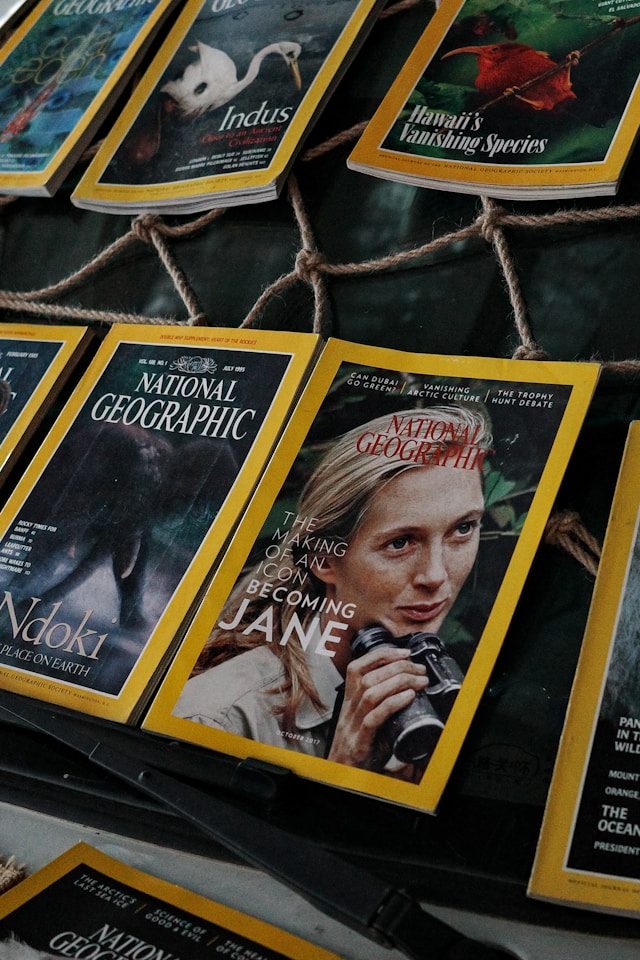
Reading on paper slows things down just enough. You pause at a photograph, flick back a page, insert a bookmark, or set the magazine down on the living room table. This physical presence changes your relationship with the content: you ‘immerse’ yourself in it a little. Many people describe the same scenario: the issue is lying around, someone picks it up, reads a double-page spread, and then you discuss it over dinner. It’s a simple way of bringing scientific culture and stories about the world into everyday life.
Print also has a subtle advantage: it reduces the temptation to switch off. On a screen, an unfamiliar word often leads to a search, then another, then a distraction. In a magazine, you stay with the story. And when you want to explore other English-language titles in the same vein, the selection of English-language magazines allows you to vary the themes whilst retaining that ‘long-form reading’ experience, which is rarer these days.
Choose articles based on your goals: learning, travelling, keeping up to date
To expand your vocabulary without even realising it
Recurring topics are your allies: the environment, exploration, history, culture and science. As you read them repeatedly, you’ll come across the same word families again and again, and memorisation happens almost automatically. This is particularly true of vocabulary related to nature and geography, which feature heavily and are often repeated in a variety of contexts.
To improve your reading comprehension
Longer articles help you practise following a line of argument, spotting transitions and understanding nuances. A good habit: as you skim through, look out for ‘pivotal’ sentences that summarise a turning point in the narrative. They often contain useful structures in English (contrasts, causes, consequences) that you can then reuse effortlessly.
To broaden your general knowledge
National Geographic also serves as a window onto distant realities. On a rainy evening, you might find yourself in the heart of an endangered forest; on a Sunday morning, you might gain a better understanding of a conservation issue or an archaeological discovery. This sense of expanding your world, issue after issue, creates a very steady motivation, stronger than any abstract goal.
Quick tips from readers to keep you going all year round
Keep the magazine in plain sight, rather than tucked away. A stack on a shelf, a coffee table or a reading nook will do. Set aside a ‘fixed time’ during the week even if it’s just a short one and treat it like a lovely appointment. If you have children or teenagers, let them flick through it too: the pictures naturally spark questions, and those questions make them want to read a box, then a paragraph.
Finally, allow yourself to read imperfectly. Skipping a passage, not understanding everything, closing the magazine after ten minutes it’s all part of the process. What matters is gentle repetition: issue after issue, English becomes less intimidating, whilst your curiosity remains intact.

















Follow us on Instagram