From the 1920s to today’s trends, fringes have stood the test of time. A look back at a fashion detail that has become a true cultural marker.

A signature style through the ages
Often seen as merely a decorative element, fringes actually have a rich history deeply rooted in various cultures. Present since ancient civilisations, they served both to adorn clothing and to symbolise status or affiliation. Over time, they have crossed continents and styles, evolving in response to cultural influences.
In the 1920s, they became emblematic of the flapper movement, embodying a new form of freedom and female emancipation. Their movement mirrored that of the body, reflecting a desire to break with the rigid codes of the past. Later, in the 1970s, they made a comeback, this time with a bohemian and rebellious spirit, in line with the artistic trends and social movements of the era.
The detail that adds movement
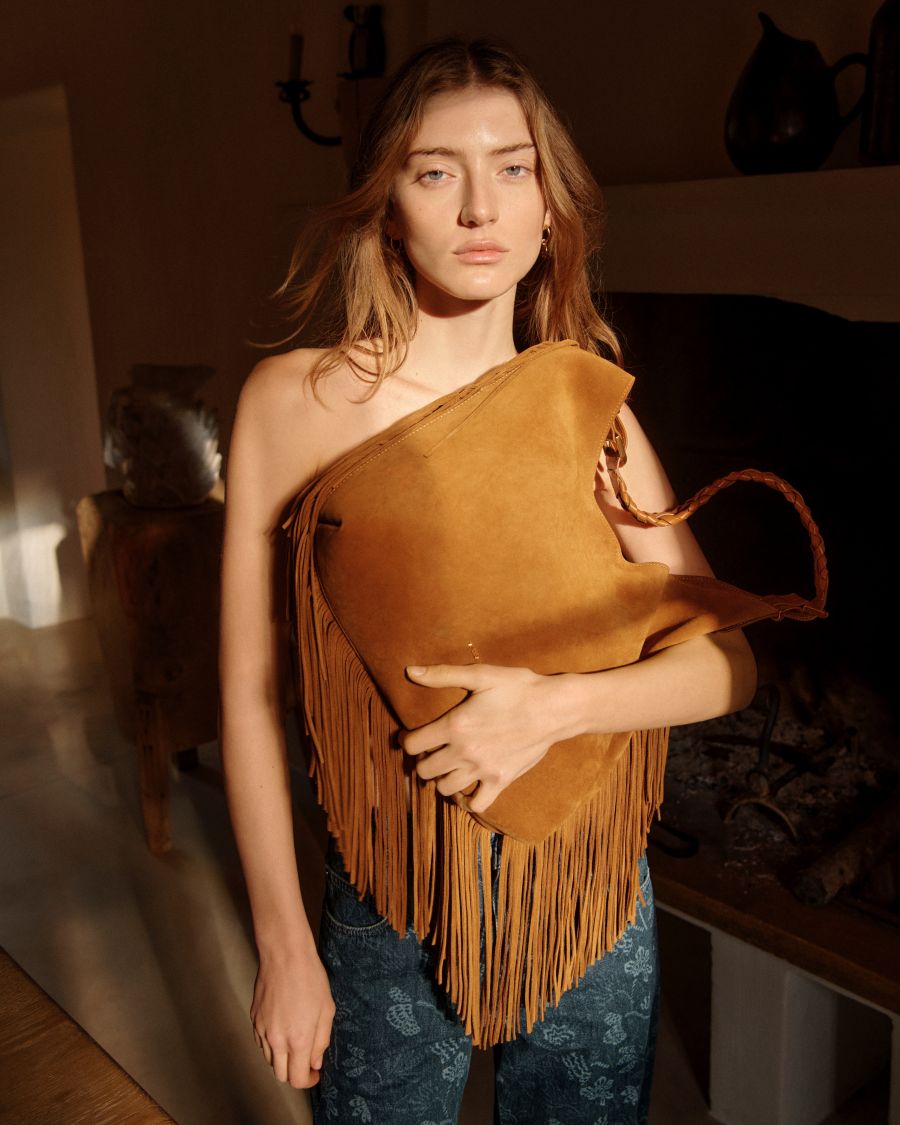
If fringing continues to captivate today, it is largely due to its ability to inject movement into silhouettes that can sometimes feel static. In a world dominated by imagery, where every detail is scrutinised, it brings a lively, almost cinematic dimension to an object or garment.
The Jess bag, for example, illustrates this trend through an aesthetic where movement becomes a visual signature. With its fringed details and hand-braided leather handle, crafted in Italy, it embodies an approach that celebrates both artisanal craftsmanship and the expression of a bohemian and romantic style.
A symbol of freedom and self-expression
Wearing fringes is often a way of asserting one’s identity and a freer relationship with the world, one less constrained by social norms. This symbolic dimension explains why they regularly make a comeback in fashion trends. In a climate where consumers are seeking meaning and authenticity, fringes emerge as a visual language capable of telling a story. They are no longer merely a detail: they become a sign, an intention.
Modernity rooted in the past
What makes fringes particularly interesting today is their ability to bridge the past and the present. They form part of a continuum, whilst being constantly reinterpreted. Contemporary designers are embracing them to revisit old codes and adapt them to current expectations.
Thus, far from being a mere passing trend, fringes reflect a broader cultural dynamic: namely, a return to elements rich in meaning, capable of transcending eras whilst retaining their expressive power.












Follow us on Instagram