
Don’t miss out on the comfort a bra perfectly suited to your body shape can provide. It’s essential, and you’ll enjoy your everyday life all the more!
Wearing an ill-fitting bra goes far beyond simple, temporary discomfort. The consequences are felt daily: persistent back pain, red marks that hollow your shoulders, a feeling of constriction that makes breathing difficult, and even a gradual deterioration of your posture.
Conversely, a perfectly fitting bra is a game-changer: it improves your comfort throughout the day, enhances the lines of your clothes, and boosts your confidence. The problem? A large majority of women wear the wrong size, often without even realizing it.
Learning about your body shape and identifying your true size is therefore essential. In the following sections, we’ll explore how to decipher sizes, correctly measure your bust, recognize the signs of a successful fit, and avoid the most common pitfalls.
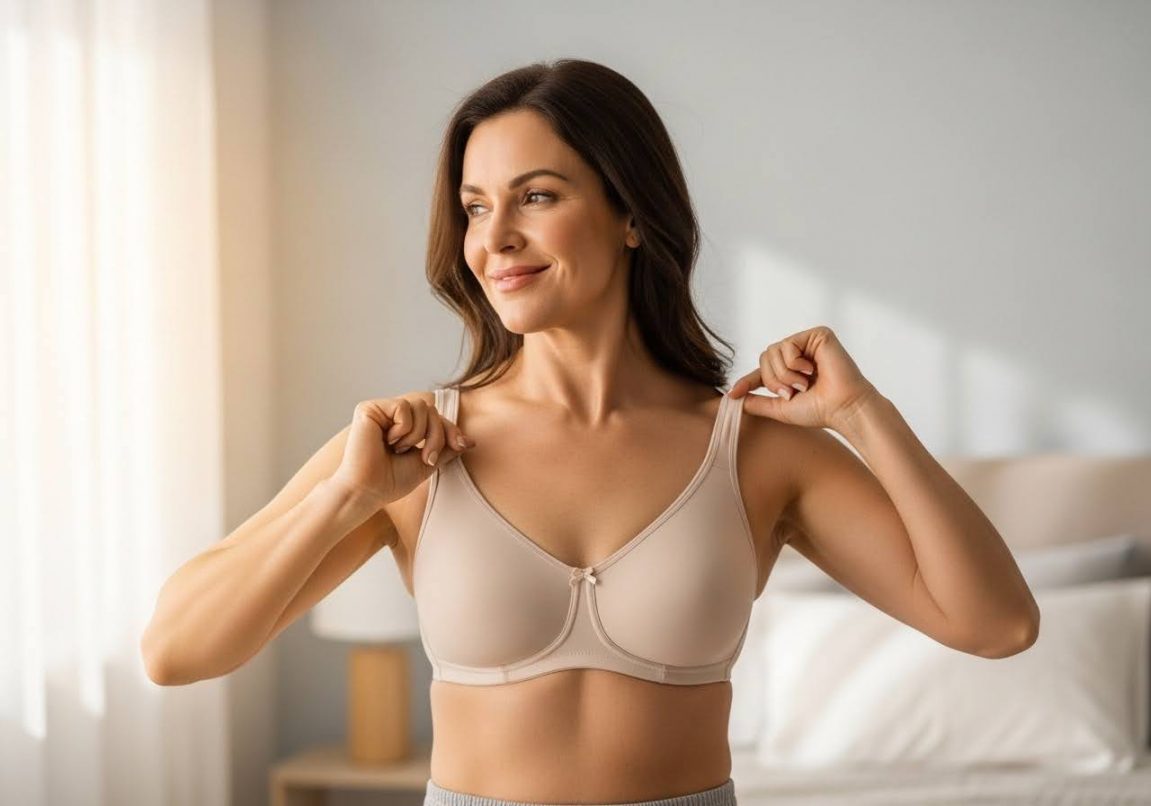
Decoding bra sizes: behind the numbers and letters
What do these indications really mean?
A bra size is based on two inseparable components: the band size (represented by a number: 80, 85, 90, etc.) and the cup size (indicated by a letter: A, B, C, D, etc.). This combination is important because a C cup does not correspond to the same volume whether it is worn with a band size of 85 or 95.
The common mistake? Thinking that only the letter determines the breast size. In reality, it is the combination of both elements that makes all the difference.
Why bother trying to find the right size?
The problems associated with an incorrect size are numerous: uncomfortable chafing, underwires that dig in, insufficient breast support, the bra back riding up, cups that bunch up or, conversely, allow skin to spill out.
On the other hand, when the size is right, everything changes: support becomes optimal, the weight of the breasts is evenly distributed across the entire torso, and neck and back strain are significantly reduced. In other words, finding the right size is the cornerstone of lasting comfort and everyday well-being.
Taking measurements at home: instructions for reliable results
Prepare thoroughly before measuring
For accurate measurements, put on a basic bra without excessive padding that doesn’t compress your breasts. Stand up straight in front of a mirror to ensure the measuring tape remains perfectly horizontal around your bust.
Ideally, ask someone to help you, as taking your own measurements can sometimes be inaccurate.
The back measurement: a crucial first step
Place the measuring tape just under your bust, ensuring it remains horizontal and not too tight. This measurement corresponds to your size (80, 85, 90, etc.).
For example, if your back measurement is around 78-80 cm, you will likely choose a 95 cm bust measurement, according to standard size charts.
Chest measurement: the second essential measurement
Now measure around the fullest part of your bust, going over the nipples and under your armpits, without compressing. The difference between this bust measurement and your underbust measurement will determine your cup size (A, B, C, D, etc.).
Once you have your measurements, consult a comprehensive Bra sizing guide to interpret them correctly and confirm the size that will provide the best support.

The telltale signs: how to know if your bra really fits you?
What characterizes a perfect fit
A well-fitting bra is recognizable by several visual and tactile details. The back remains perfectly horizontal and doesn’t ride up between your shoulder blades. The cups envelop the breasts without creating creases or allowing any skin to spill over. The straps do their job without digging into the shoulders or slipping.
Finally, the center gore (the space between the cups) lies flat against your chest. When all these elements come together, you’ve found the perfect bra: comfort and support are guaranteed.
Warning signs that should prompt you to take action
Some signs never lie: deep red marks that persist on your shoulders or under your breasts, a back that lifts as soon as you raise your arms, gaping bra cups, or conversely, a bust that spills out in the center or at the sides.
These signs reveal either a back that’s too wide or too tight, or a bra cup size that doesn’t correspond to your actual size. In any case, it’s time to rethink your sizing.
Adapt your choice according to your body type and lifestyle
Take into account your silhouette
The shape of your breasts plays a crucial role in choosing the cup and underwire that will provide the best comfort. If you have a fuller bust, opt for good back support and full-coverage cups that provide support without compression.
Conversely, a smaller bust can be suited to triangle or bandeau styles, while ensuring you choose the correct size for comfort and support.
Adapting to one’s daily activities
You don’t wear the same bra for work, sports, or relaxing at home. However, regardless of the activity, knowing your exact size remains essential to ensure proper support and protect your back health.
Each moment of the day deserves a suitable bra, but always in the right size.


















Follow us on Instagram