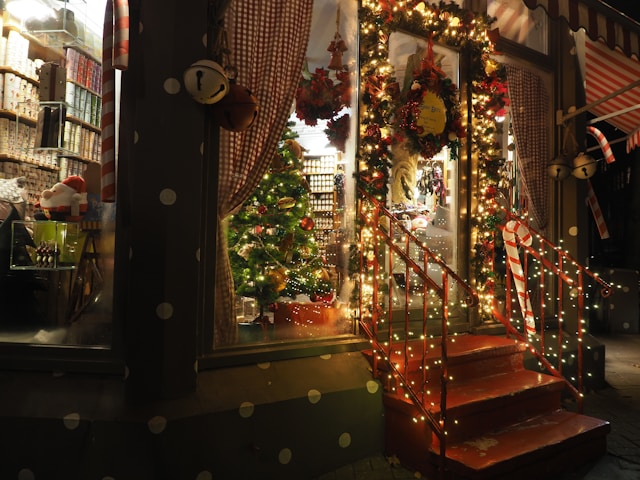
At Christmas, shop windows are transformed into temporary works of art. Commerce adopts the codes of art to create emotion, storytelling, and cultural experiences.
A festive tradition that has become a form of artistic expression
Every year, as the holiday season approaches, Christmas window displays cease to be mere commercial tools. They become stages in their own right, designed to amaze, intrigue, and make time stand still. Behind the play of light, sparkling materials, and animated decorations lies a greater ambition: to tell a story.
This tradition, deeply rooted in major cultural capitals, now goes beyond commercial logic to become a true artistic endeavor. Christmas window displays borrow their narrative codes composition, rhythm, contrast, and symbolism—from the visual arts.
They are like ephemeral installations, designed to catch the eye of passersby and provoke an immediate emotion. The goal is no longer just to display a product, but to create an immersive, almost dreamlike universe that interacts with the urban space.
When the street becomes an open-air gallery
In this context, the street is transformed into an art gallery accessible to all. Shop windows play with the surrounding architecture, the flow of passersby, and the temporality of the season. They establish a direct relationship between the work and the viewer, without filters or institutional mediation. Anyone can stop, observe, interpret, and photograph. This democratization of the aesthetic experience is one of the most fascinating aspects of Christmas window displays.
They become gathering points, visual and emotional landmarks in the city. Their temporary nature reinforces their impact: we know they will disappear after the holidays, which accentuates their symbolic and memorial value.
Between heritage and contemporary scenography
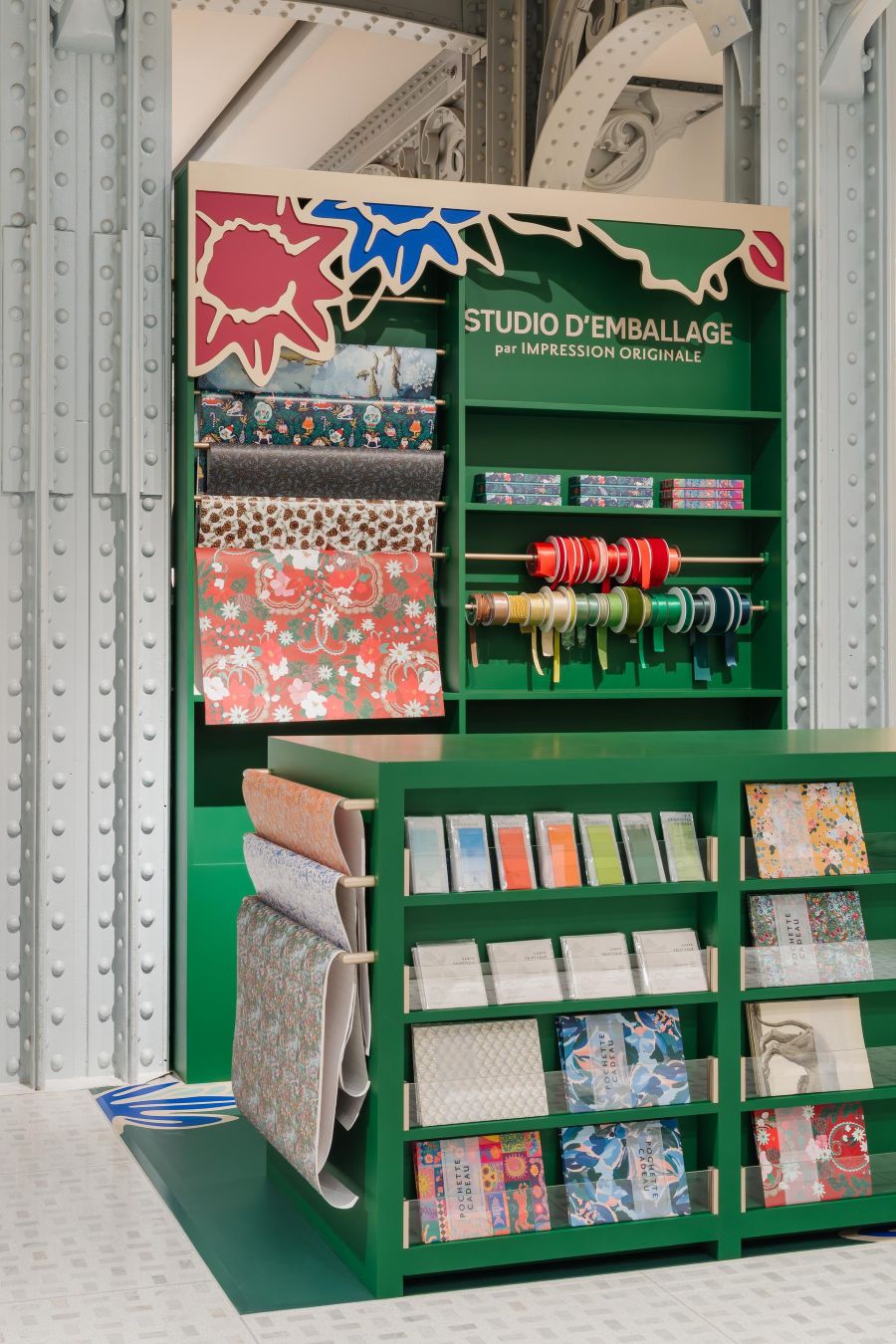
In Paris, La Samaritaine is fully embracing this trend by redesigning its window displays as a comprehensive visual narrative. Through immersive scenography, the department store employs an artistic language where every detail counts: movement, materials, colors, light. Ribbon, a central element of its Christmas display, becomes a graphic and poetic motif that guides the visitor’s gaze from the façade to the interior spaces.
This approach transforms the act of looking at a window display into a sensory experience. The decorative object is no longer an accessory; it structures the narrative and invites visitors to rediscover the place from an almost museum-like perspective, where architectural heritage and contemporary creation meet.
Commerce as a producer of cultural narratives
This phenomenon reveals a broader trend: commerce is no longer content with simply selling; it produces meaning. Through their Christmas window displays, brands adopt the role of storytellers, or even exhibition curators. They draw on the collective imagination, childhood memories, and the codes of luxury and enchantment to create a shared narrative.
This visual narrative contributes to the construction of a contemporary popular culture, where emotion and aesthetics take precedence over immediate functionality. Storefronts become spaces for projection, where everyone is free to interpret the symbols on display.
An increasingly blurred line between art and commerce
While art has traditionally been distinguished by its autonomy from the market, Christmas window displays deliberately blur this line. They borrow their forms, intentions, and sometimes even their creators from art, while retaining a commercial purpose. This hybridization raises questions: can we talk about art when there is a commercial intention?
Rather than seeing this as a contradiction, it seems more accurate to view it as a dialogue. Christmas window displays illustrate commerce’s capacity to become a space for aesthetic experimentation, where creativity is freely expressed, even within a constrained framework.
An experience that goes beyond the act of purchasing
Ultimately, what Christmas window displays offer is a break from the everyday. They provide a moment of contemplation in an often hurried daily routine, an invitation to slow down and feel. Purchasing is no longer an end in itself, but a possible consequence of a successful emotional experience.
By flirting with art, commerce is redefining its role in the city and in our imaginations. Christmas window displays are becoming much more than festive decorations; they are establishing themselves as temporary urban works of art, at the crossroads of culture, design, and collective emotion.












Follow us on Instagram