Accessible luxury is no longer a niche trend. It has become a cultural movement, driven by a generation that refuses to choose between quality and conscience. Gone are the days when prestige was measured solely by the price tag or a visible logo: today, accessible premium luxury is defined by what it says about you, not by how much it cost.
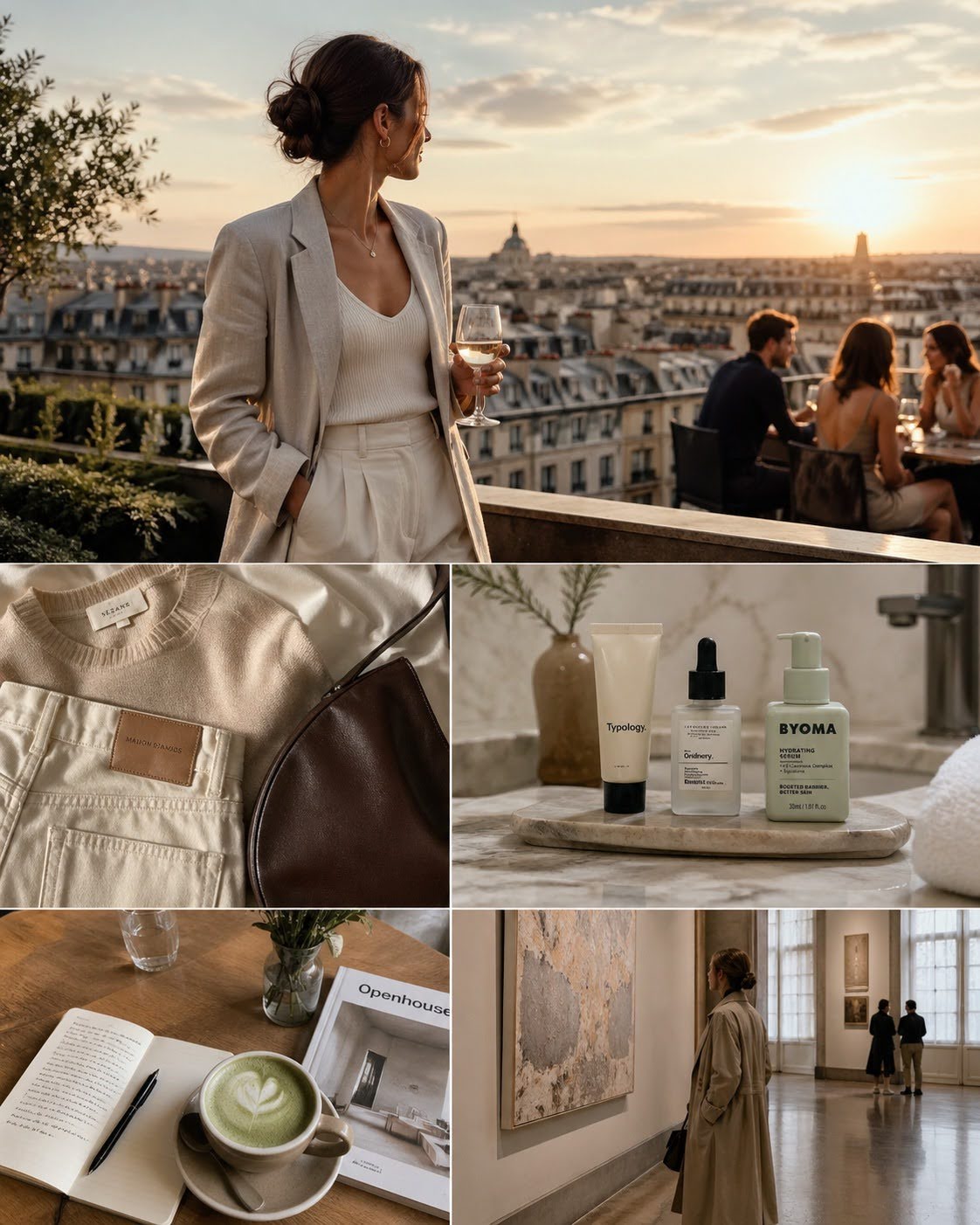
We are witnessing a complete redefinition of the codes of desire, driven as much by brands as by consumers themselves. And it is precisely this shift from mass luxury to meaningful luxury that makes this segment so fascinating to observe.
From mass luxury to meaningful luxury: what has really changed
For decades, accessible luxury operated on a simple model: replicating the visual codes of traditional luxury at more affordable prices. The result? Seasonal collections designed for quick appeal, discreet yet recognizable logos, and a promise of belonging to a certain world. This model proved successful until it ran out of steam.
What has changed is the demand itself. Consumers no longer simply want to look like someone. They want to be someone. And no logo can guarantee that for them.
When price is no longer the sole measure of exclusivity
Exclusivity, in the modern sense of the term, is no longer measured in euros: it is measured in intention, materials, and impact. A sustainably produced cashmere piece made in a small batch can generate as much (if not more) desirability as a four-figure “it” bag.
Brands that have understood this shift have completely overhauled their value proposition. Gone is the race for volume; in its place are deliberate scarcity, transparent traceability, and authentic storytelling. Sézane, Maison Standards, and Rouje perfectly embody this approach: affordable prices, yet editorial standards that rival those of the major fashion houses.
What consumers are paying for today is consistency between the brand’s messaging, the quality of the product, and the values they project by wearing it.
New generations are redefining the rules of desire
Millennials and Gen Z have grown up with unlimited access to information and thus, to comparison. They know the value of a material, where a product comes from, and how much profit is hidden behind a price tag. This heightened awareness has completely reshaped the landscape of desire.
For them, accessible premium luxury isn’t a compromise it’s an active choice. It’s about consuming better rather than more. Investing in a piece that lasts rather than buying ten items forgotten at the back of a closet. And above all, building a coherent visual identity, free from the dictates of the seasons.
It is these same consumers who are embracing secondhand goods, limited drops, and digital-native brands because these formats perfectly align with their vision of luxury: rare, fair, and meaningful.
Fashion, beauty, culture: the three realms where accessible luxury is taking hold
Accessible luxury isn’t just visible in a wardrobe. It has taken over three worlds that KODD closely observes fashion, beauty, and culture and in each of them, it’s setting new rules. What stands out is the consistency of the movement: everywhere, the same demand for quality, the same rejection of the superfluous, the same refusal to pay for a name rather than for a product.
Brands that have realized quality matters more than the logo
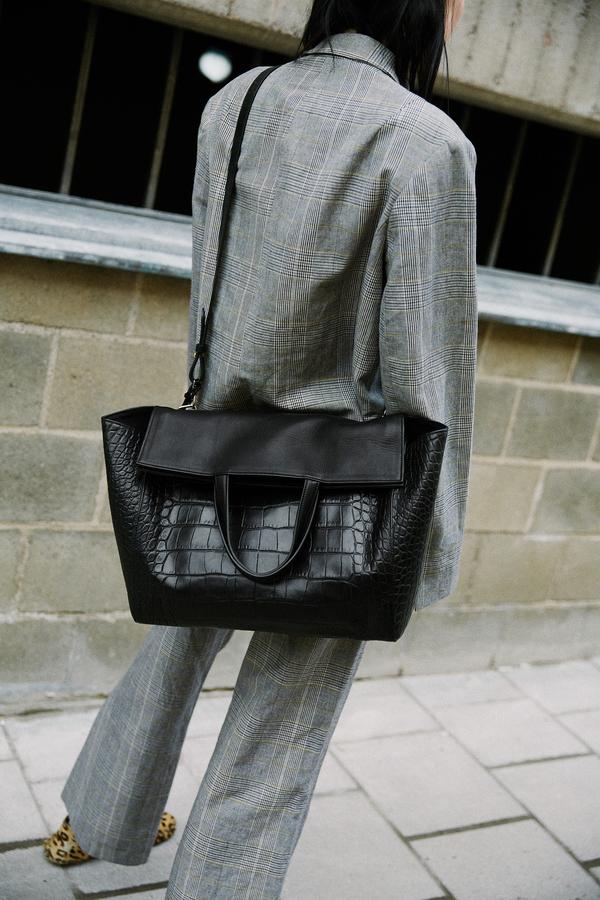
In fashion, the quiet revolution is already here. Brands like Sézane, Rouje, and Maison Standards have built their appeal without ever shouting their names from the rooftops. What do they have in common? An obsession with materials, fit, and sustainability, supported by a loyal community that recommends rather than simply consumes.
These brands perfectly embody the 2025 version of accessible premium luxury: pieces designed to last, crafted with care, and offered at prices that respect both the customer and the product. We wear them because we choose them, not because we’re trying to impress.
Clean beauty and premium skincare: the new symbols of accessible luxury
Beauty has become one of the most dynamic sectors in accessible luxury. The clean beauty movement has changed everything: it has shown that effective skincare doesn’t need flashy packaging or a three-figure price tag to be considered premium.
Rhode, the skincare range launched by Hailey Bieber, is the most telling example: minimalist formulas, targeted ingredients such as hyaluronic acid and peptides, and a commitment to affordability. The message is clear: luxury in beauty is now about what you put on your skin, not what you display on your shelf.
Brands such as Typology, Byoma and Medik8 follow the same logic: proven effectiveness, total transparency, and fair pricing.
Cultural experiences as a new form of high-end consumption
Accessible luxury has also made its way into the cultural sphere, and this is perhaps where it is most unexpected. Today, enjoying a premium experience no longer requires a huge budget: you just need to know where to look.
A festival like We Love Green, an immersive exhibition, a rooftop bar like the Terraza Mikuna at BHV Marais – these experiences offer a sensory and emotional quality comparable to that of traditional luxury, for a much more affordable price. They are carefully chosen, curated moments, lived with intention. Exactly what a digital-native audience is looking for, as they prefer to spend on memories rather than possessions.
The experience has become the new handbag: rare, memorable, and infinitely more personal.
The era of ‘try before you commit’: testing premium products without committing
The dynamics of accessible luxury have fundamentally changed. It is no longer just a question of price: it is a question of access. The new promise of premium products is the ability to try them out before committing to test the quality, enjoy the experience, and then decide.
This cultural shift is profound. It says something essential about a generation that values lived experience over immediate ownership, and which refuses to buy what it has not yet experienced.
Freemium as the new standard in digital luxury
The freemium model (free access to a basic version, with the option to upgrade to premium) has become one of the most powerful formats in accessible digital luxury. Spotify, Deezer, Adobe, Canva: all these platforms have normalised the idea that you can try out the premium service before paying.
What freemium has changed is the relationship of trust between the brand and the user: we no longer ask people to take our word for it; we let the experience speak for itself.
For digital natives, this has become a non-negotiable standard. A platform that does not offer a trial period or access without commitment is perceived as less desirable, regardless of the quality of its offering.
When premium platforms rely on barrier-free access to attract users
This approach to frictionless access has become widespread far beyond streaming. In the world of digital entertainment, many platforms have adopted the same principle: offering an initial premium experience without requiring an immediate financial commitment, allowing quality to speak for itself rather than marketing hype. The user experience is now just as important as the offering itself: intuitive navigation, quick registration and a simplified online casino login process meet the standards expected of modern premium services.

This is exactly what certain online gaming platforms offer: they allow users to explore their stylishly designed environments, seamless user experience and premium content without imposing complex procedures or immediate barriers to entry. The mechanism is identical to that of a free trial on Spotify or a free week on a premium fitness app: reducing the initial friction to let the value speak for itself.
This acquisition model, based on trust rather than coercion, has become one of the most distinctive hallmarks of accessible luxury in the digital realm.
Timeless rather than seasonal: the promise of accessible luxury
There is something deeply reassuring about the idea of buying less, but better. Accessible luxury has found its most powerful selling point not in price, but in longevity: a premium, affordable piece that stands the test of time is infinitely more valuable than a wardrobe that’s renewed every three months.
It’s a complete paradigm shift. And we love it.
Fast fashion has long thrived on urgency and planned obsolescence. Affordable luxury plays exactly the opposite card: that of permanence. A Sézane blazer, a Rouje trench coat, a Maison Standards basic these pieces never go out of fashion because they have never sought to follow a trend. They create their own, discreetly, season after season.
This approach responds to a genuine cultural fatigue. Consumers are fed up with chasing after fleeting collections that lose their appeal within a matter of weeks. They want to invest in items that have meaning and will still look good in five years’ time.
The brands that are thriving today are precisely those that have resisted the temptation to prioritise volume. Fewer products, more care put into each one. Fine materials (linen, cashmere, heavy cotton) designed to age gracefully rather than to appeal for a fleeting moment. It is this ‘buy less, buy better’ philosophy that best defines accessible premium luxury in its most accomplished form.
And the message is resonating. The rise of the premium second-hand market, driven by platforms such as Vestiaire Collective and Vinted Premium, confirms that consumers are willing to pay a fair price for quality that can be resold, passed on and worn for a long time.
For digital natives, timelessness has also become a political statement. Choosing a sustainable piece rather than a seasonal item means rejecting the model of overconsumption. It means asserting an identity. And it is, ultimately, the most coherent form of luxury there is: one that respects the customer, the product and the planet alike.










Follow us on Instagram