The sneaker has established itself as a powerful cultural marker, far beyond fashion. From its sporting origins to its social role, it reflects the evolution of our customs and identities.

A piece born out of function
Originally, sneakers were not fashion items. Designed to meet a specific need running, playing, performing they were above all functional. The first trainers appeared in the world of sport, particularly on tennis courts and athletics tracks, where grip, lightness and comfort took precedence over aesthetics. However, this utilitarian simplicity laid the foundations for a timeless design that has stood the test of time without losing its essence.
From sports equipment to the street
Gradually, trainers moved away from strictly sporting contexts and took to the streets. They became a symbol of sartorial emancipation, worn outside formal settings. This transition was driven in particular by young people, who embraced trainers as a sign of freedom and movement. In cities, they accompanied new urban practices and established themselves as a credible alternative to classic shoes, without losing their sporting DNA.
Sneakers as a reflection of an era
Each era projects its values onto the sneakers it adopts. Some styles embody the rise of popular sport, while others reflect a quest for simplicity or a return to basics.
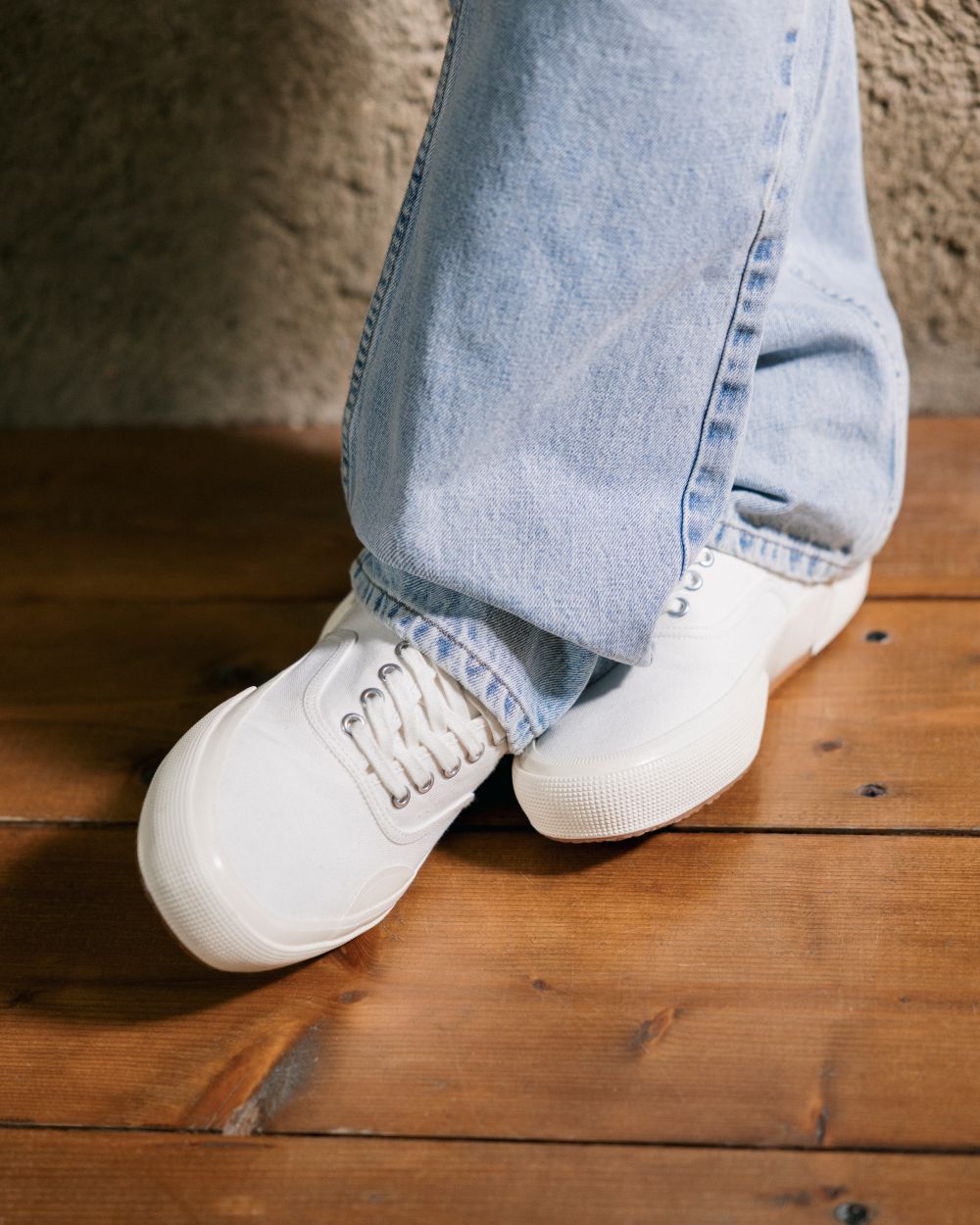
Models such as the Superga 2750 OG, originally designed for tennis, illustrate this ability to become cultural icons without radical transformation. Their refined aesthetic reflects a time when function dictated form, a legacy that is now being reinterpreted in contemporary uses.
A language of social identity
Sneakers no longer just cover your feet, they communicate. They can signal social affiliation, artistic sensibility or cultural position. In some contexts, they even become a tool for distinction or protest. Wearing a minimalist, vintage or technical model sends a different message. This silent language makes sneakers an object of personal expression, capable of telling a story without words.
A cross-cultural presence
Cinema, music, contemporary art – this type of shoe is everywhere. It is worn by artists, featured in films and exhibited in museums. This omnipresence confirms its status as a cultural object in its own right. It transcends geographical and social boundaries, creating bridges between generations, disciplines and territories. This cross-disciplinary power explains why the sneaker continues to fascinate, even in a fashion landscape saturated with new products.
Towards a more conscious vision
Today, trainers are also being questioned for their environmental and social impact. Consumers are increasingly interested in the history of models, their durability and how they are made. This awareness is restoring value to timeless designs, created to last rather than follow fast-moving trends. Sneakers are once again becoming a thoughtful purchase, chosen as much for what they represent as for what they bring to everyday life.
An icon of modern daily life
Sneakers have become a lasting fixture because they accompany the changes in our lifestyles. Mobile, versatile and accessible, they meet the demands of a busy everyday life. More than just a stylish accessory, they embody a way of living in the world, combining comfort, collective memory and individual expression. Beyond style, sneakers are now a lasting cultural symbol.



















Follow us on Instagram