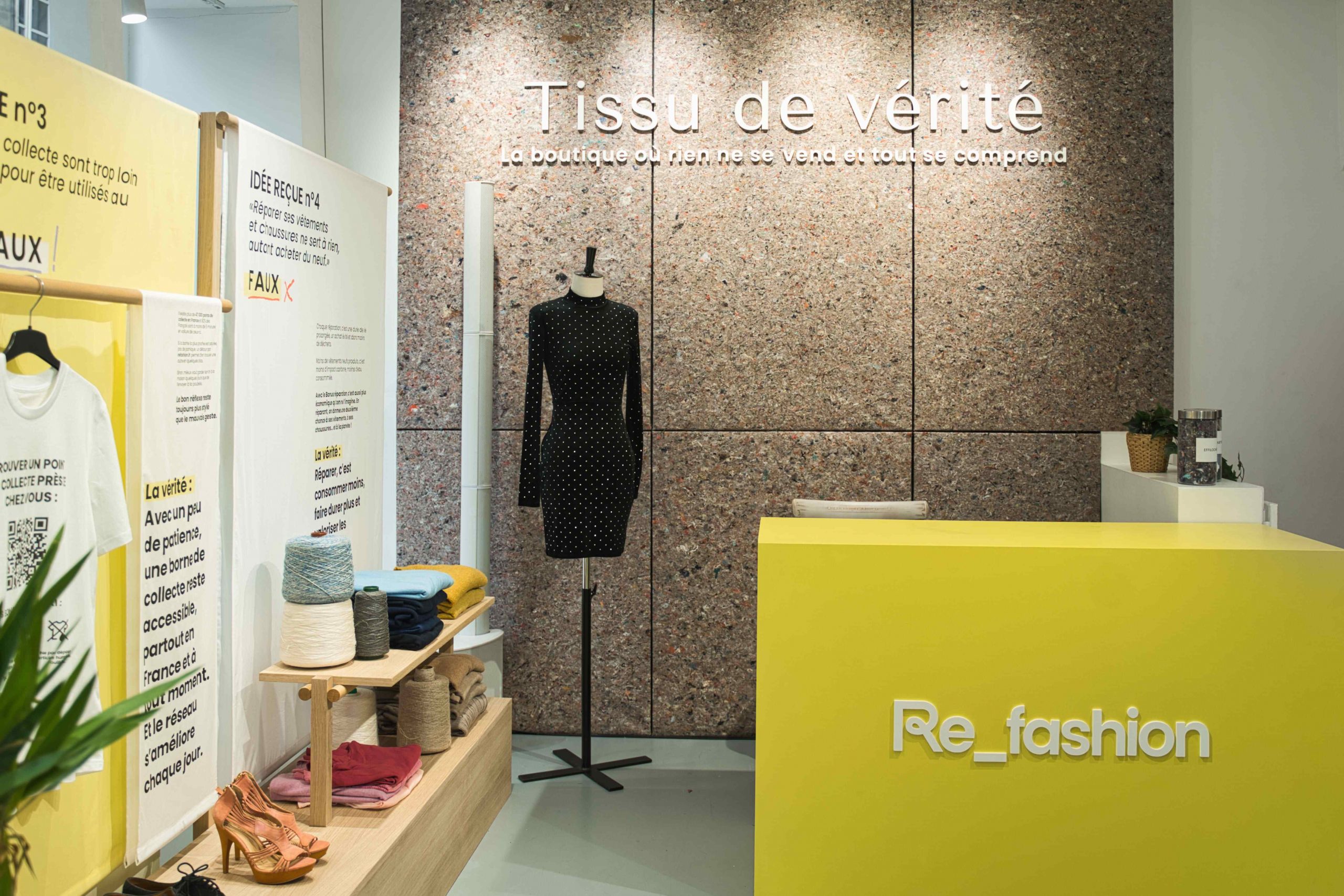
At a time when awareness is growing, Refashion is proposing an idea to give our clothes a new lease of life.
Refashion is the French eco-organisation responsible for organising, structuring and developing the collection, sorting, reuse and recycling of clothing, household linen and footwear. It supports brands in implementing a more circular fashion industry, informs consumers about proper sorting practices and supports innovation in recycling. Its goal is to reduce the environmental impact of textiles by promoting second lives, repairs and the transformation of materials to limit waste and encourage more responsible consumption.
Why is this essential?
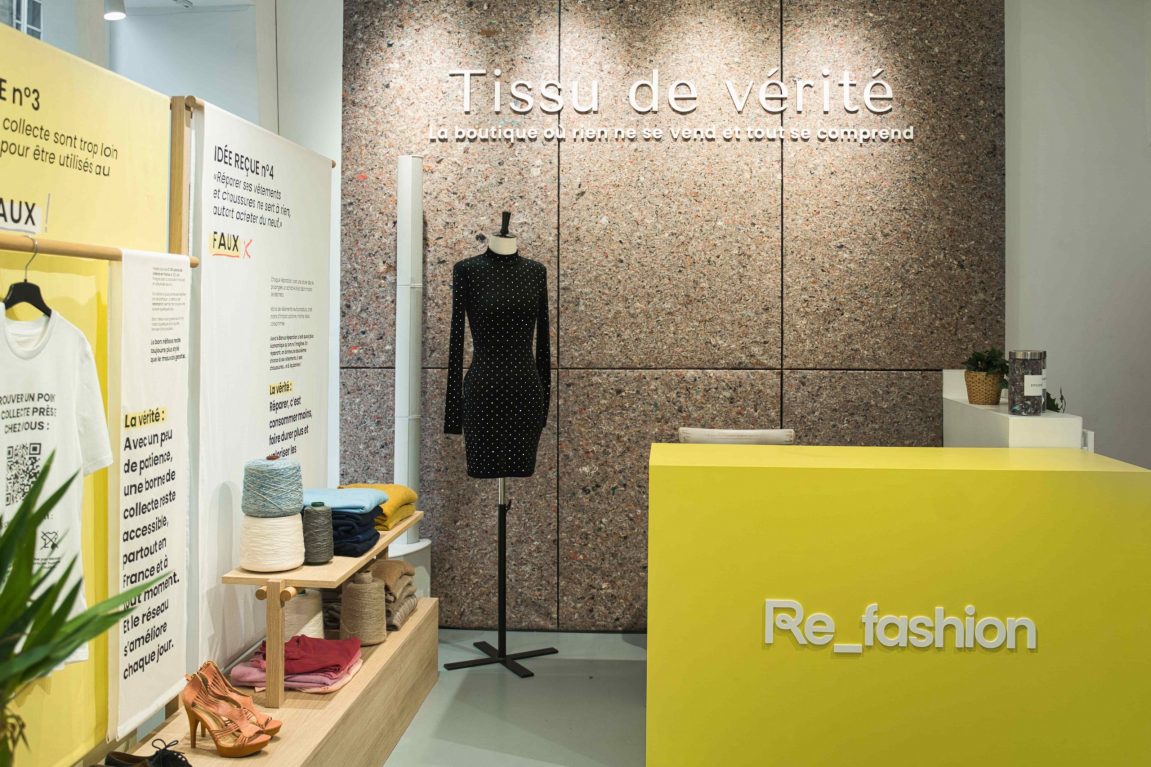
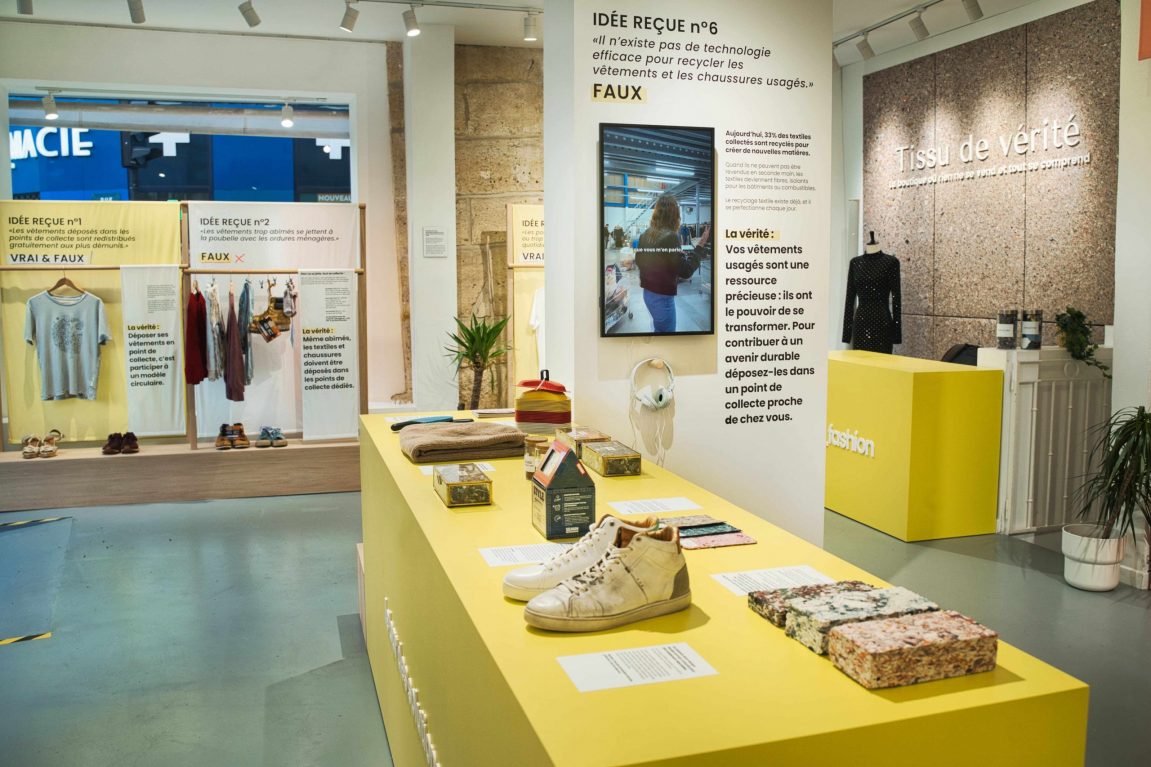
‘Tissu de Vérité’ is an immersive and educational pop-up organised by Refashion in Paris, which invites the public to understand the real impact of fashion and textiles rather than buying clothes. The event, which was free and open to all, offered a fun and interactive journey where visitors could discover and deconstruct preconceived ideas about fashion. The second life of clothing and the right steps to take for responsible consumption. The aim is to raise awareness and inspire more sustainable habits around the way we consume fashion. To promote the concept, Refashion called on Daphné Bürki, the television presenter, stylist and actress known for her rich and versatile media career. She is also appreciated for her commitments as a member of the jury on the queer show Drag Race France, as well as her role as styling and costume director for the Paris 2024 Olympic and Paralympic Games ceremonies.
How do you become eco-friendly?
You become eco-responsible by becoming aware of the impact your daily choices have on the environment. This means consuming more sensibly: buying less, buying better and buying more sustainably. Recycling, repairing and favouring second-hand goods helps to reduce waste. To do this, we have two options:
Choosing eco-designed clothing may cost more at the time of purchase. But if it is designed to last, it will be more durable. Eco-friendly brands may therefore be more affordable, but this cost is justified by the fact that the materials are sustainable or certified, they pay their workers more fairly and often produce in smaller batches, which avoids overproduction and the intensive use of water, chemicals and fossil fuels.
Voir cette publication sur Instagram
Second-hand clothing is accessible to everyone, and donating clothes remains an essential gesture that should not be stopped. Donating clothes is a small gesture for yourself, but a big gesture for the planet. Fashion is the most polluting industry, so every gesture counts (sorting, repairing, giving a second life) to preserve the planet while mobilising many players and creating jobs. Repairing means consuming less, making things last longer and promoting craftsmanship. Nothing is thrown away, everything is collected!














Follow us on Instagram