In this era of global standardisation, bespoke craftsmanship has emerged as a contemporary cultural phenomenon, restoring value to time, skill and the relationship between creation and the individual.
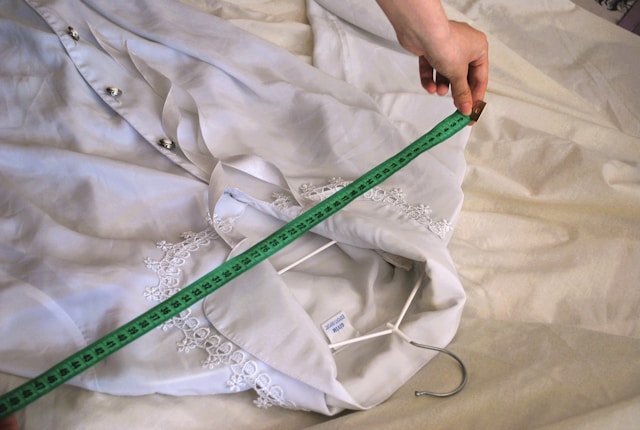
In contrast to accelerated flows and standardised production, bespoke craftsmanship is now returning to the forefront of creative practices. Long confined to the world of traditional luxury goods or a social elite, it is now redefining itself as a true cultural gesture, imbued with meaning, temporality and resilience. More than just an alternative to industrial production, bespoke craftsmanship is becoming a language.
In a world dominated by instantaneity and infinite reproduction, choosing bespoke means accepting to slow down. It means recognising the value of the time needed for creation, listening and adjustment. This approach is part of a broader reflection on our consumption habits, but above all on our relationship with cultural objects: how are they designed, for whom, and why?
The body as the starting point for creation
Bespoke tailoring puts the body back at the centre of the creative process. Where standards impose abstract and standardised forms, this practice starts with the real individual, with their unique characteristics, proportions and history. Bespoke clothing or any other bespoke object ceases to be a product and becomes an interface between the designer and the person wearing it.
This relationship profoundly transforms the act of creation. It requires special, almost intimate attention, which brings bespoke tailoring closer to certain ancestral artistic or craft disciplines. We no longer create for an undefined mass, but for a specific, embodied presence.
Create less, but with intention
In the contemporary cultural landscape, bespoke design is also part of a deliberate choice for simplicity. It stands in stark contrast to overproduction and accumulation, not through militant rhetoric, but through practice itself. Produce only what is necessary, at the right time, with complete control over the creative process.
This approach restores a strong symbolic value to the created object. It is no longer replaceable or interchangeable. It is the result of a thoughtful, limited and conscious process. It is precisely within this limitation that its cultural power lies.
Contemporary initiatives that embody this vision
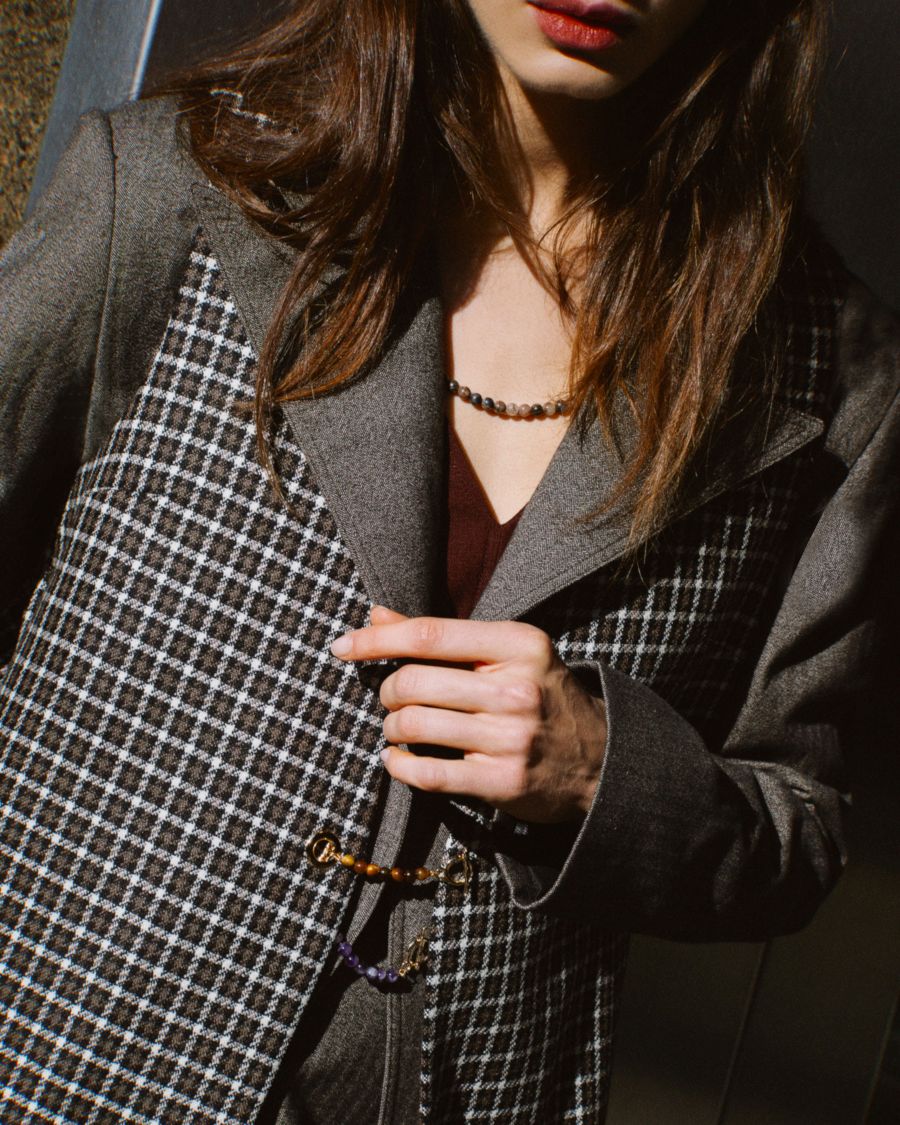
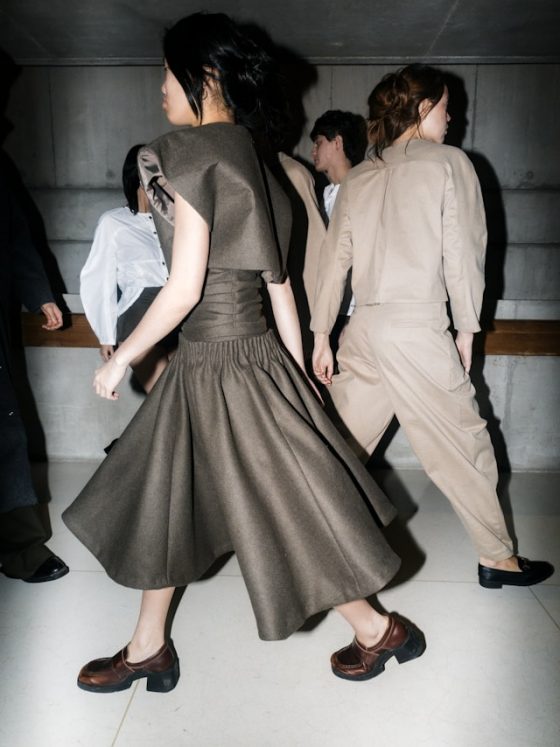
Certain emerging brands are putting this philosophy into practice. For example, Nicha Paris is developing a wardrobe built around essential pieces, designed to last through the seasons and made from natural fibres and fabrics sourced from dormant stocks at French luxury fashion houses. Each piece on display is unique, each fabric different, and production is made to order only, with precise measurements taken.
This type of initiative shows how bespoke tailoring can be seen not as a sales pitch, but as a coherent cultural stance, rooted in respect for the material, time and craftsmanship.
Bespoke craftsmanship as a living legacy
Historically, bespoke craftsmanship was the norm long before industrialisation. Its reappearance today is therefore not a step backwards, but rather a contemporary reappropriation of a legacy. It engages with the past while responding to current challenges: sustainability, identity, meaning.
In this context, each piece becomes a living archive. It bears the mark of a choice, a moment, a human relationship. Unlike mass-produced objects, it retains a memory, visible or invisible, which gives it a particular cultural depth.
A cultural response to standardisation
In an era of aesthetic globalisation, where the same silhouettes, shapes and references circulate from one continent to another, bespoke fashion offers a silent but powerful response. It affirms that uniqueness is not a superfluous luxury, but a cultural necessity.
Choosing bespoke means refusing to erase differences. It means affirming that creation can and must adapt to humans, not the other way around. In this sense, bespoke goes far beyond the realm of fashion: it becomes a contemporary cultural act, imbued with meaning, resistance and reinvention.








Follow us on Instagram