Improvised outings, real-time culture, new urban habits, how digital technology has put an end to the famous ‘I don’t know what to do tonight’.
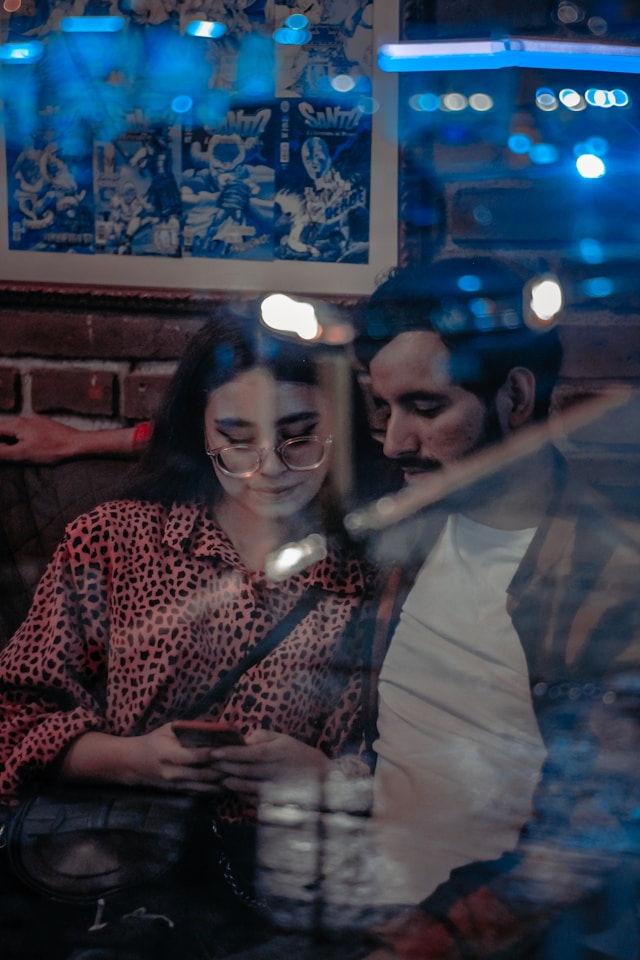
A phrase that has become symptomatic of our times
‘I don’t know what to do tonight’, this seemingly banal phrase has long summed up a very contemporary paradox: living in cities rich in cultural offerings, yet feeling like you’re missing out on something essential. Concerts, exposition, parties, gatherings… the choice has never been so vast, and yet indecision persists.
This unease does not stem from a lack of options, but from an excess of them. Too much information, too many platforms, too many impersonal recommendations. Faced with this saturation, choosing becomes a mental burden. Going out is no longer a spontaneous pleasure, but a sometimes daunting exercise in sorting through options.
When spontaneity disappears from cultural outings
For a long time, going out involved a degree of improvisation, a poster spotted in the street, a discussion with friends, a chance discovery. Today, planning has taken over. We book, we compare, we anticipate. As a result, culture is sometimes consumed rather than experienced.
This loss of spontaneity has profoundly changed our relationship with cities. Even when surrounded by events, many people end up staying at home because they don’t know what to choose. The famous ‘I don’t know what to do tonight’ becomes a symptom of a broader need to rediscover a simple and immediate relationship with cultural life.
Real time as a new urban compass
In recent years, another way of going out has emerged: real time. Rather than searching long in advance, people are interested in what is happening here and now, around them. The city is no longer perceived as a fixed programme, but as a living organism in constant motion.
This approach transforms the urban experience. It allows us to rediscover neighbourhoods, follow the rhythm of cultural seasons and let ourselves be surprised. Going out becomes a fluid, almost instinctive gesture, guided by desire rather than the obligation to optimise one’s time.

Digital technology as a discreet cultural mediator
Contrary to popular belief, digital technology does not necessarily distance us from culture. Used correctly, it can become a discreet mediator. Certain applications position themselves as tools for exploration rather than prescription, highlighting what is happening around us without imposing a rigid hierarchy.
This is the logic behind platforms such as durevie, which offer an instant snapshot of local cultural life, whether you are a resident or just passing through a European city. The aim is no longer to see everything, but to make better choices in the moment.
Travelling, going out, living: increasingly blurred boundaries
Another major change is the blurring of boundaries between residents and travellers. Today, people go out in Berlin, Amsterdam or Barcelona as they would in their own city. Local culture becomes accessible without instructions, without a paper guide, without excessive planning.
This fluidity is redefining the urban lifestyle. Going out is no longer a special event, but a natural extension of everyday life, even when travelling. The phrase ‘I don’t know what to do tonight’ is losing its meaning: the answer is already there, at your fingertips.
Towards a culture that is more lived than programmed
The gradual disappearance of this phrase may mark a turning point. A return to a culture that is lived rather than over-consumed, to outings chosen for their personal resonance rather than their popularity.
In a fast-paced world, knowing what to do tonight is no longer a question of quantity, but of connection: connection to the city, to others, to the present moment. And perhaps that is where the true cultural revolution of our time lies.
















Follow us on Instagram