In contrast to uniformity, handcrafted tiles captivate with their authenticity and uniqueness. A trend that blends heritage, texture and contemporary aesthetics.
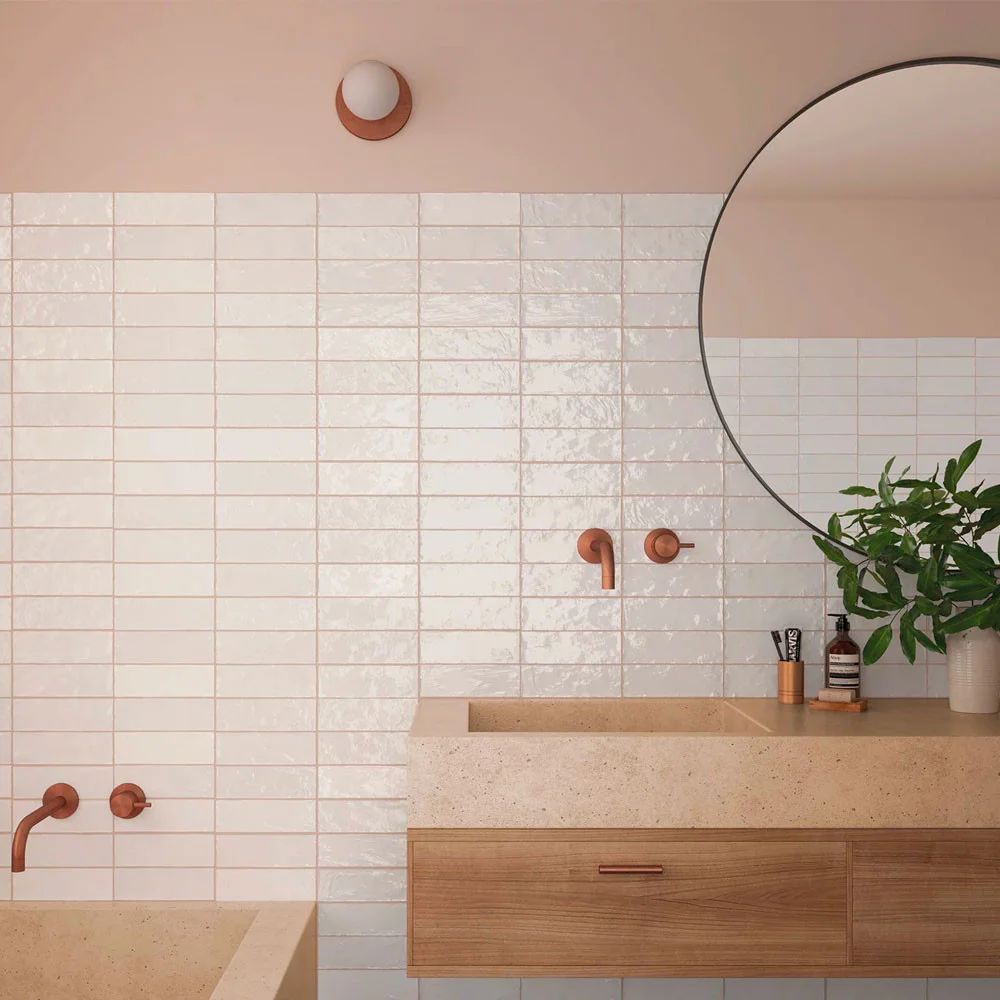
The return of tiles to our interiors
Long regarded as purely functional, tiles are now taking centre stage in interior design once again. This resurgence in interest is part of a wider trend towards a return to authentic materials that lend character to spaces. In interiors that are often minimalist, they bring texture and depth that break with uniformity.
The legacy of timeless craftsmanship
Originating in Morocco, and more specifically in the Fez region, this art form is the result of a dialogue between earth, water and fire. Each tile is shaped by hand, sun-dried and then fired in traditional kilns where the heat, never uniform, creates infinite chromatic nuances.
It is this artisanal production that gives Zellige tiles their unique character. Unlike industrial products calibrated to the millimetre, they embrace their irregularities: slightly chipped edges, variations in thickness and a vibrant surface that catches the light like no other material.
The appeal of handcrafted tiles
Among the various options available, handcrafted tiles are particularly appealing. Drawing on traditional craftsmanship, they stand out for their irregularities and subtle variations. Each tile is unique, with variations in colour and texture that catch the light in different ways. This controlled imperfection creates a lively effect, a far cry from overly smooth industrial finishes.
A bridge between tradition and urban minimalism
If this aesthetic is so appealing today, it is because of its ability to adapt to the codes of contemporary culture. In a Parisian loft or a Mediterranean villa, it brings that ‘extra touch of soul’ that interior designers seek so much. Used as a kitchen splashback or a bathroom wall, it breaks up the rigidity of straight lines.
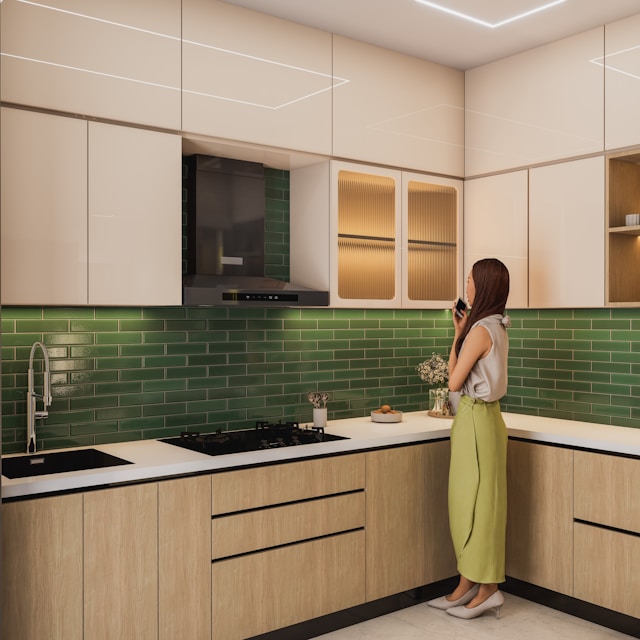
Shades of off-white, emerald green and umber create a natural play of light and shadow. Each wall becomes a living work of art, changing its appearance as the day progresses. It is this sensory dimension that makes it a must-have for high-end residential projects and luxury boutiques.
A timeless and sustainable aesthetic
Choosing this material is also a choice for a sustainable aesthetic. In an age of ‘Fast-Deco’, it stands as a guarantee of a décor that gains value over time. Its robustness and ease of maintenance conceal a great nobility. It does not age; it develops a patina. For design enthusiasts, it offers an organic alternative to traditional tiles, providing a visual depth that only terracotta can deliver.
With this in mind, incorporating this type of cladding requires a considered approach. It is not simply a matter of following a trend, but of working with a living material that interacts with its surroundings.
The luxury of emotion and uniqueness
Beyond a mere trend, the use of these materials reveals a quest to reconnect with the object itself. In a world saturated by digital technology and sleek surfaces, touching the uneven texture of glazed terracotta offers a tactile sensation that has become rare. This is where the true definition of contemporary luxury lies: owning a piece that no one else will have exactly the same.
Each installation thus becomes a personal statement, a conscious choice to prioritise the story of a craftsman’s hand over mass production. By taking up a permanent place on our walls, these coverings do more than simply adorn a room; they transform our homes into sanctuaries of light, nuance and character, proving that craftsmanship is, more than ever, the future of luxury design.








Follow us on Instagram